
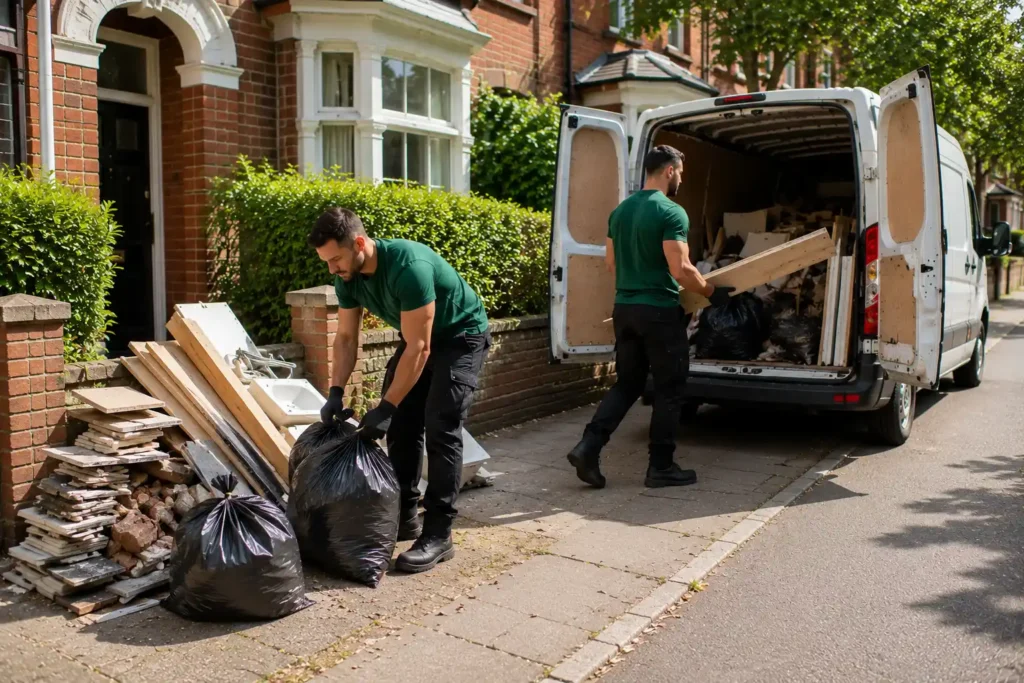
A home renovation can transform a property, but it can also leave behind a surprising amount of waste. Broken tiles, plasterboard, timber, old kitchen units, rubble, flooring and bathroom fittings can quickly accumulate once building work begins.
For homeowners in Ealing, builders’ waste should be dealt with through an appropriate disposal route rather than placed in ordinary household bins or left outside the property. Depending on the amount and type of material, options can include taking eligible DIY waste to a local reuse and recycling centre, arranging a skip or using a licensed waste collection company.
For larger clearances, residents can arrange rubbish removal in Ealing to collect suitable renovation and builders’ waste directly from the property.
What Counts as Builders’ Waste?
Builders’ waste, sometimes called construction, demolition or renovation waste, includes materials produced when a property is repaired, altered, refurbished or demolished.
Common examples include:
- Bricks
- Rubble
- Concrete
- Plaster
- Plasterboard
- Tiles
- Timber
- Flooring
- Doors
- Windows
- Kitchen units
- Bathroom fittings
- Soil
- Paving slabs
- Roofing materials
- Skirting boards
- Old fixtures and fittings
The Environment Agency classifies construction and demolition materials according to what they contain and whether they are hazardous. Concrete, ordinary bricks and uncontaminated tiles, for example, can generally fall within non-hazardous construction waste classifications, while materials contaminated with hazardous substances require different handling.
This is why it is useful to separate renovation waste rather than putting every material into one mixed pile.
Can Builders’ Waste Go in Household Bins?
Large quantities of building and DIY waste should not simply be placed in ordinary household rubbish collections.
Renovation materials can be heavy, bulky and may require different treatment from normal domestic rubbish. Materials such as rubble, plasterboard, timber, tiles and old fittings are better dealt with through an appropriate recycling centre or authorised collection service.
Ealing Council specifically categorises materials used in DIY demolition, renovation and construction projects as DIY or building waste at its Greenford Road reuse and recycling centre.
Planning the disposal method before starting a renovation can therefore prevent piles of waste accumulating around the property.
Can Builders’ Waste Be Taken to Greenford Recycling Centre?
Yes. Ealing residents can take many types of DIY and building waste to Greenford Road reuse and recycling centre, UB6 9AP, although specific rules and charges apply. A time slot must be booked before visiting, and residents without a booking are not permitted to enter.
The centre currently lists a wide range of renovation materials as accepted DIY or building waste, including:
- Concrete
- Turf
- Paving slabs
- Soil
- Plasterboard
- Kitchen fittings
- Cupboards
- Worktops
- Painted wood
- Skirting boards
- Sheds
- Fencing
- Rubble
- Rocks and stones
- Tarmac
- Decking
- Timber
- Plaster
- Roofing tiles
- Slates
- Windows and doors
- Wall and floor tiles
- Bathroom suites and fittings
These materials are accepted subject to the centre’s current DIY and construction waste rules.
Is DIY Waste Free at Greenford Recycling Centre?
Ealing Council currently provides residents with a limited weekly free allowance for DIY and construction waste.
Residents can take either two 50-litre rubble bags or one item no larger than 2m × 0.75m × 0.7m each week without charge. This allowance cannot be saved and combined with future weeks. Waste above the free allocation is chargeable.
The council currently states that chargeable DIY and construction waste above the allowance is priced at £28.55 per 100kg for listed materials.
This can make the recycling centre practical for smaller DIY projects, but homeowners completing a kitchen refurbishment, bathroom renovation or substantial building project may have considerably more material than the weekly allowance.
What Renovation Waste May Be Charged For?
Ealing Council currently identifies several types of DIY and building waste that can attract charges when the free allowance is exceeded, including:
| Type of Waste | Examples |
| Masonry | Bricks, rubble, stones and slabs |
| Roofing | Slates, roofing materials and tarmac |
| Gypsum products | Plasterboard and plaster |
| Timber | Floorboards, skirting and general timber |
| Fixtures | Doors and windows |
| Kitchen materials | Units and fittings |
| Bathroom materials | Bathroom units and fittings |
| Outdoor materials | Soil, turf, fencing and sheds |
| Building services | Plumbing and wiring |
Residents bringing mixed construction, demolition or DIY loads must use the weighbridge at Greenford Road.
Current prices and allowances can change, so they should always be checked with Ealing Council before travelling.
Separate Waste Before Disposal
One of the easiest ways to manage renovation rubbish is to separate it as the work progresses.
Instead of creating one large mixed pile, consider keeping individual areas or containers for:
Rubble and Masonry
Keep bricks, concrete, paving, tiles and similar heavy materials together where practical.
Timber
Separate clean timber, old floorboards, skirting and wooden fittings from other waste.
Metal
Metal pipes, fittings and other recyclable metal should be kept separate where possible.
Plasterboard
Plasterboard deserves particular attention because gypsum-containing waste needs appropriate handling.
Government landfill guidance states that gypsum-based waste such as plasterboard must be separated where necessary so it does not go into landfill cells accepting biodegradable waste.
Packaging
Cardboard packaging from kitchens, bathrooms, flooring or new appliances can often be separated from general renovation rubbish.
Greenford Road accepts cardboard separately, and Ealing Council recommends separating materials before visiting because this can make recycling and unloading easier.
Separating materials from the beginning can make disposal considerably simpler than sorting a mixed pile after construction work is finished.
What Should You Do With Plasterboard?
Plasterboard is common during extensions, loft conversions, wall repairs and general refurbishment.
It should be kept reasonably separate from ordinary mixed waste because it contains gypsum and requires an appropriate disposal route.
Ealing’s Greenford Road centre currently accepts both plasterboard and plaster as DIY or building waste, subject to the site’s allowances and charges.
If a private waste collector is being used, tell the company beforehand that plasterboard is included. This allows the collector to determine whether it can be taken as part of the proposed load and how it should be handled.
What About Old Kitchen and Bathroom Units?
Kitchen and bathroom refurbishments generate a mixture of bulky and heavy materials.
Typical kitchen renovation waste can include:
- Worktops
- Cupboards
- Cabinet doors
- Sinks
- Tiles
- Flooring
- Timber
- Packaging
- Old appliances
Bathroom projects may produce:
- Toilets
- Basins
- Baths
- Shower trays
- Tiles
- Cabinets
- Flooring
- Plumbing materials
Greenford Road currently accepts kitchen and bathroom units and fittings as DIY or building waste, with charges potentially applying depending on the quantity taken.
Appliances should be separated from general building debris where appropriate. Ealing’s centre accepts items such as fridges and freezers separately, and its current rules state that some appliances remain free for residents when properly sorted for recycling and the required identification is provided.
Can Paint Be Taken to the Recycling Centre?
Unused paint should not automatically be mixed with rubble or ordinary builders’ waste.
Greenford Road currently accepts all types of paint and states that paint collected at the centre is sent for community reuse through the Community RePaint scheme.
Keeping paint containers separate also reduces the risk of liquids leaking across otherwise recyclable materials.
Be Particularly Careful With Asbestos
Older properties can contain asbestos-containing materials, and renovation work can uncover materials that were previously hidden behind walls, ceilings, flooring or insulation.
Asbestos should not be treated as ordinary builders’ rubble.
Government guidance advises householders to obtain local authority information about asbestos and its disposal.
Ealing Council states that Greenford Road does not accept any form of asbestos. Its current guidance says cement-bonded asbestos is accepted at the Abbey Road reuse and recycling centre, while other forms require an alternative appropriate disposal route.
If a suspicious material is discovered during renovation, do not simply break it into pieces and place it in a rubble bag. Appropriate professional advice may be required before it is disturbed or removed.
Who Is Responsible for Waste Produced by a Builder?
There is an important distinction between waste produced by a householder undertaking their own DIY project and waste created by a tradesperson working at the property.
Government waste duty-of-care guidance states that when a tradesperson carries out work at a property, the tradesperson is responsible for the waste they produce, including its transport and disposal. The disposal cost should normally be incorporated into what they charge for the work.
Therefore, before hiring a builder, homeowners should ask:
- Who will remove the building waste?
- Is removal included in the quotation?
- Will a skip be provided?
- Will waste be taken away during or after the project?
- Is the contractor using an authorised waste route?
Clarifying this at the start can prevent disagreements when the work finishes and several tonnes of unwanted material remain outside the house.
What If You Created the Renovation Waste Yourself?
Someone completing their own home renovation may need to arrange disposal themselves.
Options can include:
- Taking qualifying DIY waste to a recycling centre.
- Hiring a suitable skip.
- Arranging a licensed rubbish clearance service.
- Using specialist collection for hazardous materials.
The right choice depends largely on the amount, weight and type of waste.
A few broken tiles from a small DIY job may be manageable using a recycling centre, while waste from an entire kitchen removal or substantial refurbishment may require a dedicated collection.
Skip Hire or Rubbish Removal: Which Is Better?
Both approaches can work, but they suit different projects.
| Consideration | Rubbish Removal | Skip Hire |
| Loading | Collection team may load agreed waste | Customer or builders usually load skip |
| Space required | Collection vehicle generally leaves after loading | Skip remains at property |
| Best for | Cleared or accumulated renovation waste | Projects producing waste over several days |
| Restricted access | May work where suitable vehicle access is available | Skip placement may be more difficult |
| Collection timing | Waste can be removed in a scheduled visit | Skip collected after hire period |
| Mixed materials | Depends on collector’s acceptance rules | Depends on skip provider’s conditions |
A rubbish removal service may suit homeowners who already have a pile of renovation debris ready for collection, particularly where they do not want a skip occupying the property for several days.
A skip may work better during a longer project where waste is generated continuously.
When Is a Builders’ Waste Collection Useful?
A dedicated waste collection may be worth considering when:
- A kitchen has been stripped out
- A bathroom has been renovated
- Flooring has been removed
- A property has undergone refurbishment
- A garden structure has been demolished
- Several rooms have been redecorated
- Heavy rubble needs removing
- The homeowner has no suitable vehicle
- Waste needs to be cleared promptly
It can also reduce the need for repeated journeys carrying dusty or heavy building materials in a private car.
Before booking, give the collector a clear description of the waste because heavy materials such as soil, concrete and rubble can affect how a collection is priced and transported.
Check That a Private Waste Carrier Is Authorised
Using an unknown person with a van can create problems if the waste is later dumped illegally.
Householders have a waste duty of care requiring them to take reasonable measures to ensure household waste is transferred to an authorised person.
Government guidance specifically says that when a private company such as a skip hire or clearance business removes household waste, the householder should check that it holds a valid upper-tier waste carrier registration.
Useful checks can include:
- Asking for the business name
- Checking waste carrier registration
- Obtaining a receipt
- Keeping collection details
- Recording relevant vehicle information if appropriate
Government enforcement guidance notes that records such as business details, registration information and receipts can help demonstrate that reasonable checks were made if waste is subsequently discovered fly-tipped.
Do Not Leave Builders’ Waste on the Pavement
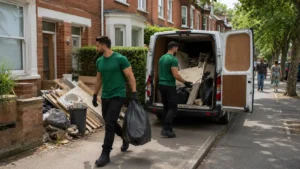
Renovation waste should not simply be moved from inside the property onto a public pavement.
Rubble bags, timber, bathroom fittings and construction debris can create obstructions and do not automatically become the council’s responsibility simply because they have been placed outside.
Arrange the disposal route before moving a large amount of material out of the property.
If waste must temporarily remain on private property, store it securely so that loose materials cannot escape, blow into the street or create avoidable hazards.
How to Prepare Builders’ Waste for Collection?
A little preparation can make collection quicker and easier.
Separate Different Materials
Keep timber, rubble, plasterboard, metal and general waste separate where possible.
Bag Smaller Debris
Small pieces of rubble and broken material are easier to handle when placed into suitable strong rubble bags rather than lightweight household bin bags.
Avoid making individual bags so heavy that they cannot be safely moved.
Stack Timber Carefully
Remove or clearly identify protruding nails and sharp fixings where practical.
Keep Access Clear
The collection team may need to move waste between the property and a vehicle. Clear unnecessary obstacles from the route.
Mention Heavy Materials
Tell the collector if the load contains:
- Soil
- Concrete
- Bricks
- Rubble
- Tiles
- Paving slabs
These materials can become extremely heavy even when they occupy relatively little space.
Identify Anything Unusual
Paint, chemicals, batteries, gas cylinders and suspected asbestos should always be mentioned before collection rather than hidden inside a mixed load.
What Is the Easiest Way to Deal With Renovation Waste?
The easiest method depends on how much waste the project creates.
For a small DIY project, Ealing’s recycling centre may be the most practical option, particularly where the waste falls within the council’s current free allowance.
For a larger renovation, a skip or professional waste collection may be more convenient because substantial quantities of rubble, plasterboard, timber and fittings can require several vehicle trips.
Where a builder or other tradesperson created the waste, responsibility for transporting and disposing of that waste normally rests with the tradesperson under the waste duty-of-care guidance.
Hazardous materials require a separate approach and should never simply be mixed into ordinary renovation debris.
Final Thoughts
Builders’ waste is an unavoidable part of many home renovations, but dealing with it responsibly should be planned alongside the building work itself.
Ealing residents can use Greenford Road reuse and recycling centre for many types of DIY and construction material, subject to its booking requirements, allowances and charges. Larger quantities may be better suited to a skip or an authorised waste collection service.
Separating rubble, plasterboard, timber, metal and other materials can make recycling easier, while hazardous materials such as asbestos require specialist consideration.
Most importantly, homeowners should know who is responsible for the waste and make sure any private collector used is appropriately authorised. That helps keep renovation waste out of fly-tips and ensures the home improvement project ends with the property properly cleared.