
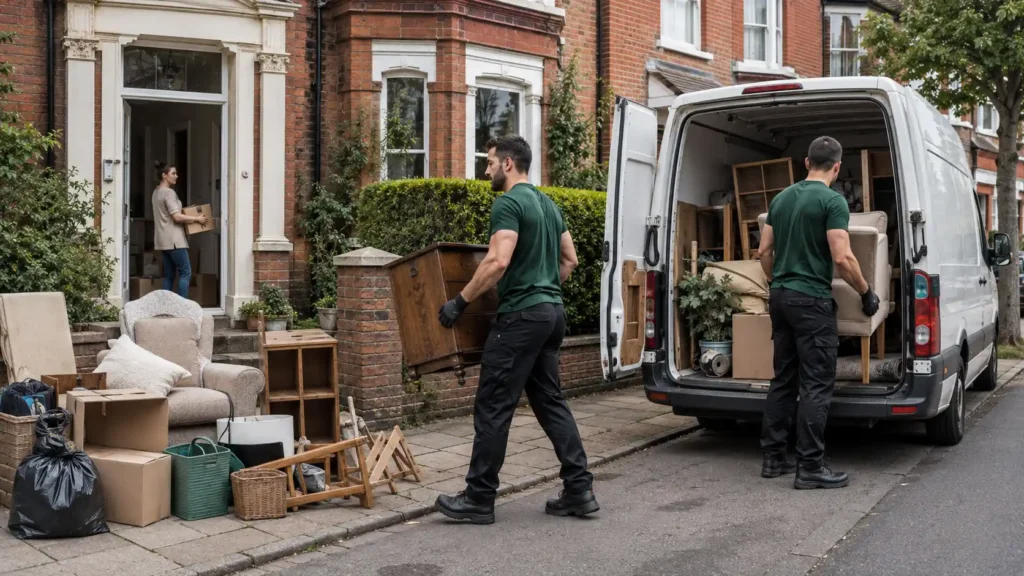
Moving home is often the point when years of unwanted belongings suddenly become impossible to ignore. Old furniture, broken appliances, boxes stored in cupboards, garden rubbish and items that were supposed to be dealt with “later” can quickly turn packing into a much bigger job.
For households in Ealing, clearing the property before moving day can make the entire process easier. The simplest approach is to start early, work through the property systematically and separate belongings according to what will be kept, sold, donated, recycled or disposed of.
Residents dealing with larger quantities of unwanted furniture and household waste can also arrange rubbish removal in Ealing rather than trying to transport everything themselves.
When Should You Start Clearing a House Before Moving?
Ideally, decluttering should begin several weeks before the moving date rather than during the final few days.
Starting early provides enough time to decide what is worth taking to the new property and prevents unwanted belongings from being packed simply because there is no time to sort them.
A practical timetable could look like this:
| Time Before Moving | Main Task |
| 4–6 weeks | Sort lofts, garages, cupboards and storage areas |
| 3–4 weeks | Sell or donate usable unwanted items |
| 2–3 weeks | Arrange bulky furniture and rubbish collections |
| 1–2 weeks | Clear garden, shed and remaining storage spaces |
| Final week | Remove last unwanted items and clean empty rooms |
| Moving day | Carry out a final property check |
The exact schedule will depend on the size of the property and the amount of clutter, but leaving rubbish clearance until moving day itself can create unnecessary pressure.
Start by Separating Everything Into Categories
Trying to decide what to do with each item individually can become slow and frustrating.
Instead, divide belongings into clear groups.
Keep
These are belongings that will definitely move to the new property.
Once an item has been placed in this category, pack it rather than leaving it in the room to be reconsidered later.
Sell
Furniture, electronics, appliances and other possessions in good condition may still have resale value.
Selling unwanted items before moving can reduce the amount that needs to be transported while potentially contributing towards moving expenses.
Donate or Give Away
Usable furniture, clothes and household items may be suitable for donation or reuse.
Ealing Council encourages residents to consider giving usable bulky items to others before arranging waste collection.
Recycle
Cardboard, paper, certain plastics, metals, textiles and other recyclable materials should be separated where appropriate rather than automatically being placed into general rubbish.
Dispose
Broken furniture, heavily damaged belongings and other items that cannot reasonably be reused may require an appropriate waste collection or recycling service.
Using these categories prevents useful possessions from accidentally ending up in the rubbish pile.
Clear One Room at a Time
A whole-house clearance can feel overwhelming when every room is tackled simultaneously.
A room-by-room approach usually makes progress much easier to measure.
1. Clear the Loft First
Lofts frequently contain possessions that have not been used for years.
Common items can include:
- Old suitcases
- Christmas decorations
- Children’s belongings
- Boxes of paperwork
- Broken furniture
- Old electrical equipment
- Unwanted clothing
- Stored household items
Work through each box rather than automatically moving everything to the new loft.
If something has been stored untouched for several years, consider whether there is a genuine reason to pay to transport and store it again.
2. Sort the Garage and Shed
Garages and sheds often become long-term storage areas for items that no longer have a clear purpose.
These spaces may contain:
- Broken garden furniture
- Old bicycles
- Timber
- Tools
- Plant pots
- Shelving
- Packaging
- DIY materials
- Unwanted storage units
Separate ordinary household items from materials that may require specialist disposal.
Paint, chemicals, batteries and other potentially hazardous materials should not simply be added to an ordinary mixed rubbish collection without checking the appropriate disposal requirements.
3. Declutter Bedrooms
Bedrooms can usually be cleared relatively quickly once clothing has been sorted.
Consider whether unwanted:
- Beds
- Mattresses
- Wardrobes
- Dressing tables
- Bedside cabinets
- Chairs
- Mirrors
will be sold, donated or removed before moving.
Large furniture deserves particular attention. Measuring the new property before moving an oversized wardrobe or bed can prevent paying to transport something that will not fit.
4. Clear the Living Room
Living rooms often contain some of the largest items in the property.
These might include:
- Sofas
- Armchairs
- Cabinets
- Coffee tables
- Bookcases
- Television stands
- Rugs
- Shelving
If furniture is not going to the new home, arrange its removal well before the removals company arrives.
Leaving an unwanted sofa until moving day can create complications because normal household rubbish collections are not designed for large furniture.
Ealing Council advises that excess rubbish, furniture and other large items should not be put in or beside normal rubbish bins. Suitable items can instead be dealt with through bulky waste services or taken to an appropriate reuse and recycling centre.
5. Tackle the Kitchen Carefully
Kitchens often contain far more belongings than expected.
Before packing, check:
- Cupboards
- Drawers
- Food storage
- Cleaning cupboards
- Small appliances
- Crockery
- Pots and pans
- Reusable containers
Dispose of expired food appropriately and avoid transporting products that are unlikely to be used.
Working appliances that are no longer required may have reuse options, while broken electrical items should be dealt with through suitable recycling routes rather than automatically placed with ordinary rubbish.
6. Don’t Forget the Garden
The garden is easily overlooked until the final few days.
Before moving, check for:
- Broken garden furniture
- Old plant pots
- Branches
- Hedge cuttings
- Timber
- Fencing
- Children’s outdoor toys
- Damaged tools
- Shed contents
Ealing Council states that garden waste should not be put into ordinary household rubbish collections and provides separate garden waste arrangements.
Clearing the garden early also gives time to distinguish ordinary garden waste from bulky items such as damaged furniture or dismantled sheds.
Decide What Furniture Is Actually Worth Moving
Moving furniture costs money, takes time and consumes space in a removals vehicle.
Before automatically taking everything, ask:
- Will it fit in the new property?
- Is it still in good condition?
- Is there already equivalent furniture at the new home?
- Would replacing it cost less than moving it?
- Does it have practical or sentimental value?
This is particularly important when downsizing.
Someone moving from a large house into a smaller flat may discover that several wardrobes, cabinets, sofas or dining furniture items simply cannot be accommodated.
Sell Useful Items Early
Selling unwanted belongings can be an effective way to reduce clutter, but it should not be left until the final week.
Large items can take time to sell and buyers may cancel collection arrangements.
Start with higher-value possessions such as:
- Furniture
- Electronics
- Appliances
- Bicycles
- Tools
- Collectables
Set a deadline. If an item has not sold by that date, decide whether it should be donated, reused or removed.
Otherwise, the property can end up full of unsold items immediately before the move.
Donate Items That Still Have Useful Life

Not every unwanted possession needs to become waste.
Furniture, clothes, kitchenware and household belongings that remain usable may be useful to someone else.
Possible routes include:
- Charity organisations
- Community groups
- Friends or relatives
- Local reuse networks
- Online giveaway groups
Acceptance policies differ, particularly for upholstered furniture, mattresses and electrical equipment, so check before travelling with an item.
Ealing Council also promotes reuse as an alternative for suitable bulky household possessions.
Use Ealing’s Recycling and Bulky Waste Options
Some items will inevitably need to be removed.
Ealing Council operates a bulky items collection service for eligible large household items and also provides information about local reuse and recycling facilities.
These services can work well when the household has enough time to plan around collection arrangements or has suitable transport for a recycling centre.
Council services have their own conditions regarding what is accepted and how items must be presented, so residents should check the current requirements before relying on a particular option.
When Does Private House Clearance Make Sense?
A private rubbish removal service can be particularly useful when the house contains several different types of unwanted items or when the household cannot transport bulky waste independently.
It may be worth considering when:
- Several rooms need clearing
- A sofa or mattress needs removing
- Large furniture is upstairs
- A garage or loft is full
- There is significant garden rubbish
- Moving day is approaching
- The household does not have a suitable vehicle
- Multiple bulky items need removing together
Rather than making several journeys, customers can arrange for an appropriate clearance team to load and remove agreed items directly from the property.
Access should be explained when booking, particularly where the property has narrow stairs, limited parking, upper-floor rooms or a long distance between the house and the collection vehicle.
Check Who Takes Your Waste
When using a private waste collector, choosing an authorised operator is important.
Householders have a duty of care regarding their waste. Government guidance says reasonable steps should be taken to ensure household waste is transferred to an authorised person.
The Environment Agency operates a public register where residents can check registered waste carriers, brokers and dealers.
Residents should therefore be cautious about handing rubbish to an unknown collector simply because the price appears unusually cheap.
Keeping collection details or a receipt can also provide useful evidence of how unwanted waste was handled.
Avoid Leaving Unwanted Items Outside the Property
Putting unwanted furniture or bags of rubbish on the pavement is not an appropriate substitute for arranging collection.
Ealing Council specifically states that large items and excess rubbish should not simply be left inside or beside normal household rubbish bins.
Arrange a disposal route before carrying bulky possessions outside.
This is particularly important during a move when boxes and furniture can accumulate rapidly at the front of a property.
Create a Final-Week Clearance Pile
During the last week, create one clearly defined area for everything that still needs to leave the property but is not travelling to the new home.
For example:
Furniture
- Unwanted chairs
- Tables
- Shelving
Bulky items
- Mattress
- Bed frame
- Broken cabinets
General rubbish
- Damaged possessions
- Packaging
- Unusable household items
Recycling
- Cardboard
- Paper
- Appropriate recyclable materials
Keeping these items together makes the final collection much easier and reduces the risk of something valuable being removed accidentally.
Don’t Pack Rubbish Just Because You Are Running Out of Time
One of the most common moving mistakes is packing everything during the final rush.
That often means boxes arrive at the new property containing possessions that should have been discarded beforehand.
Every unnecessary box adds:
- Packing time
- Moving effort
- Vehicle space
- Unpacking time
- Clutter in the new home
If a possession already has no place or purpose before the move, transporting it rarely solves the problem.
House Clearance Checklist Before Moving
Use this checklist during the final stages of the move:
- Clear the loft
- Sort the garage
- Empty the shed
- Declutter wardrobes
- Check kitchen cupboards
- Remove unwanted furniture
- Arrange mattress disposal
- Clear garden rubbish
- Donate usable belongings
- Sell valuable unwanted items
- Separate recycling
- Arrange bulky waste collection
- Check the waste carrier where using a private collector
- Remove remaining rubbish
- Check cupboards and storage spaces again
- Carry out a final walk-through
What Should Be Cleared First When Moving House?
Start with areas containing belongings that are rarely used.
A sensible order is:
Loft → garage → shed → spare rooms → bedrooms → living areas → kitchen → garden → final everyday belongings
This approach allows normal household life to continue while less important possessions are sorted.
Everyday necessities should usually be left until the end.
Can a House Be Cleared in One Day?
A small property with relatively little clutter may be manageable in a day, but a heavily furnished house is more difficult.
Attempting a large clearance at the last minute increases the chance of:
- Throwing away useful belongings
- Packing unnecessary items
- Missing cupboards or storage spaces
- Having nowhere to put bulky waste
- Delaying the move
Starting early is almost always easier than trying to complete an entire property clearance immediately before handing over the keys.
A Clearer Property Makes Moving Easier
A successful house move is not simply about packing possessions into boxes. It is also an opportunity to decide what genuinely deserves space in the next home.
By starting several weeks ahead, sorting belongings systematically and arranging appropriate recycling or waste collections, Ealing residents can substantially reduce what needs to be packed and transported.
Usable belongings can be sold or passed on, recyclable materials can be separated, and bulky furniture or accumulated household waste can be dealt with through council services or an authorised private collector.
The result is a cleaner property to hand over, fewer unnecessary belongings to move and a much more organised start in the new home.